


 |
Read about the Desert national park of Rajasthan. The Desert national park is an excellent example of desert ecology.
|
Desert National Park
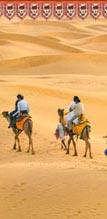
The Desert National Park is an excellent example of the ecosystem of the Thar Desert and its rich fauna. The Sudashri forest post is the most ideal place for observing wildlife in the Desert National Park. Sand dunes form less than 20 percent of the Park, which consists of craggy rocks, pavements and compact salt lake bottoms; inter medial areas and fixed dunes.
The Desert national Park's inhabitants include the blackbuck, chinkara, wolf, Indian fox, desert fox, hare and desert cat. Flights of sandfrouse start coming to waterholes from sunrise onwards. One also hear the morning call of the grey partridge. Blue tailed and green bee-eaters, drongos, common and bush quail and Indian rollers are birds, which are commonly found around waterholes. The Desert National park is also home to the great Indian Bustard which is peril of extinction.
Surrounded by Vindhya and Aravalli ranges, the Desert National park provides a panoramic view with waterfalls. The three major lakes - Rajbaugh, Milak talao and Padam talao serve as watering holes for the various wild species. It is 180 km south-east of Jaipur and at a distance of 275 km from Agra. It is a superb example of desert ecology, speckled with dhok, ronj, salai, bear and palm trees; it is a haven for various species.
The Desert national Park's inhabitants include the blackbuck, chinkara, wolf, Indian fox, desert fox, hare and desert cat. Flights of sandfrouse start coming to waterholes from sunrise onwards. One also hear the morning call of the grey partridge. Blue tailed and green bee-eaters, drongos, common and bush quail and Indian rollers are birds, which are commonly found around waterholes. The Desert National park is also home to the great Indian Bustard which is peril of extinction.
Surrounded by Vindhya and Aravalli ranges, the Desert National park provides a panoramic view with waterfalls. The three major lakes - Rajbaugh, Milak talao and Padam talao serve as watering holes for the various wild species. It is 180 km south-east of Jaipur and at a distance of 275 km from Agra. It is a superb example of desert ecology, speckled with dhok, ronj, salai, bear and palm trees; it is a haven for various species.

